

- The evolution of the simulator market
- Advantages of buying: Complete control and ownership
- Advantages of long-term leasing: Flexibility and peace of mind
- The business perspective: ROI and operational efficiency
- Choosing the right hardware for your strategy
- The best of both worlds: Operational leasing with SIM83
The evolution of the simulator market
By 2026, sim racing has matured into a multi-billion-dollar industry. As motorsport federations now recognise sim racing as a valid route to obtaining racing licences, the stakes in getting the right equipment have never been higher. Whether you’re an ambitious professional driver or a business owner looking for a high-traffic attraction, the choice between ownership and leasing determines your flexibility, technical support and long-term financial health.
Advantages of buying: Complete control and ownership
Buying a simulator is the traditional route favoured by those who want complete control over every component and software setting. When you own the hardware, you are the master of your own ‘cockpit’.
Advantages of buying:
- No monthly costs: Once the initial investment is covered, your only running costs are electricity and software subscriptions (such as iRacing or Assetto Corsa Competizione).
- Unlimited customisation: You can mix and match components as you please. You can add top-of-the-range Simube accessories or specific steering wheels to your setup without having to consult the equipment owner.
- Resale value: High-quality chassis from brands such as Trak Racer retain their value surprisingly well on the second-hand market, allowing for a partial return on your investment should you decide to upgrade.
Disadvantages of purchase:
- High initial capital outlay: Professional equipment with a movable platform can easily exceed €15,000 to €30,000.
- Responsibility for maintenance: From firmware conflicts to mechanical wear on the pedal springs – you are the chief mechanic.
- Technological obsolescence: In the rapidly changing world of fitness hardware, today’s flagship model can become ‘mid-range’ in just 24 months.
Advantages of long-term hire: Flexibility and peace of mind
Long-term hire (or leasing) has become extremely popular with both individuals and business customers. It transfers the burden of ownership to the provider, allowing the user to focus exclusively on their time on the track.
Advantages of leasing:
- Low barrier to entry: Instead of a massive upfront payment, you pay a predictable monthly fee. This preserves your cash flow for other investments or race entry fees.
- Technical support and maintenance: Most professional leasing contracts include a comprehensive service package. If the motor fails or a Windows update crashes the telemetry, it is the provider’s job to fix it.
- Always up to date: Many leasing programmes allow for periodic hardware upgrades. This ensures you’re always racing with the latest Direct Drive technology from brands such as Moza Racing or Fanatec.
Disadvantages of renting:
- Higher long-term costs: Over a 5-year period, you may end up paying more for the lease than the purchase price of the simulator would have been.
- Contractual restrictions: You may be restricted in terms of upgrading hardware or using certain unauthorised third-party software.
Business perspective: ROI and operational efficiency
For businesses, the debate over leasing versus buying usually comes down to return on investment (ROI) and tax benefits. Operating leases are often a tax-deductible expense (OpEx), whereas a purchase is a capital expenditure (CapEx) that is depreciated over several years.
If you run a sim centre or a brand activation, equipment availability is your most important metric. A leasing partner provides a turnkey solution – from delivery and installation to on-site technical support. This eliminates the need for your staff to become sim racing experts, which is often an overlooked hidden cost of ownership.
Choosing the right hardware for your strategy
Whether you rent or buy, the components you choose will determine your experience.
- For beginners and enthusiasts: Many start with reliable ecosystems such as Thrustmaster or Cammus to get a feel for the hobby without significant expense.
- For professional realism: If the goal is to develop a professional driver, DOF Reality’s motion platform is essential for replicating G-forces and weight transfer.
The best of both worlds: Operational leasing at SIM83
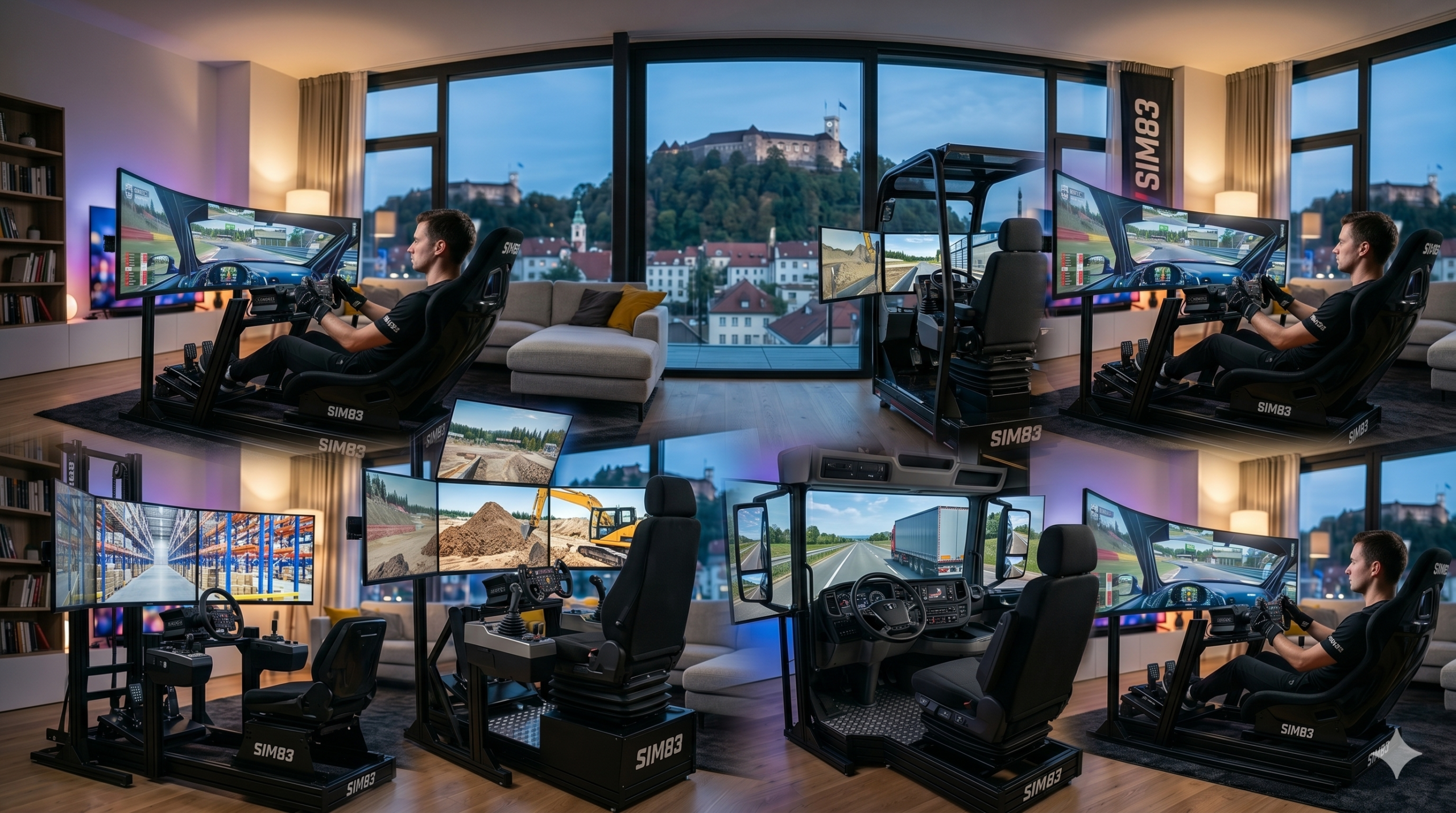
At SIM83, we’ve found that many of our clients want the prestige of a bespoke, top-of-the-range simulator without the headaches that come with ownership. That’s why we offer our clients operational leasing of bespoke simulators.
We design the simulator precisely to your specifications – selecting displays, a seat and controls that meet your needs – and then provide it to you through a flexible lease. You receive the latest technology, full maintenance support and the option to upgrade, whilst keeping your capital liquid.