

Fusion of virtual and reality: SIM83 and Formula 1
The roar of engines, the blur of speed and the precision of human-machine interaction define the fascinating world of Formula 1. It is a realm where milliseconds separate victory from defeat and where the pursuit of perfection is an endless journey. While the pinnacle of motorsport has traditionally been confined to elite tracks and exclusive teams, advances in simulation technology are bridging this gap and bringing the visceral thrill of F1 closer to enthusiasts and aspiring racers. At the forefront of this technological revolution is SIM83, a company dedicated to providing unparalleled motion simulation experiences. This article delves into the extraordinary event in Ljubljana, where SIM83 motion simulators took center stage under the auspices of Visa and the F1 team Visa Cash App Racing Bulls, and explores the indispensable role of simulators in the complex ecosystem of Formula 1.


Experience in Ljubljana: SIM83 and Formula 1
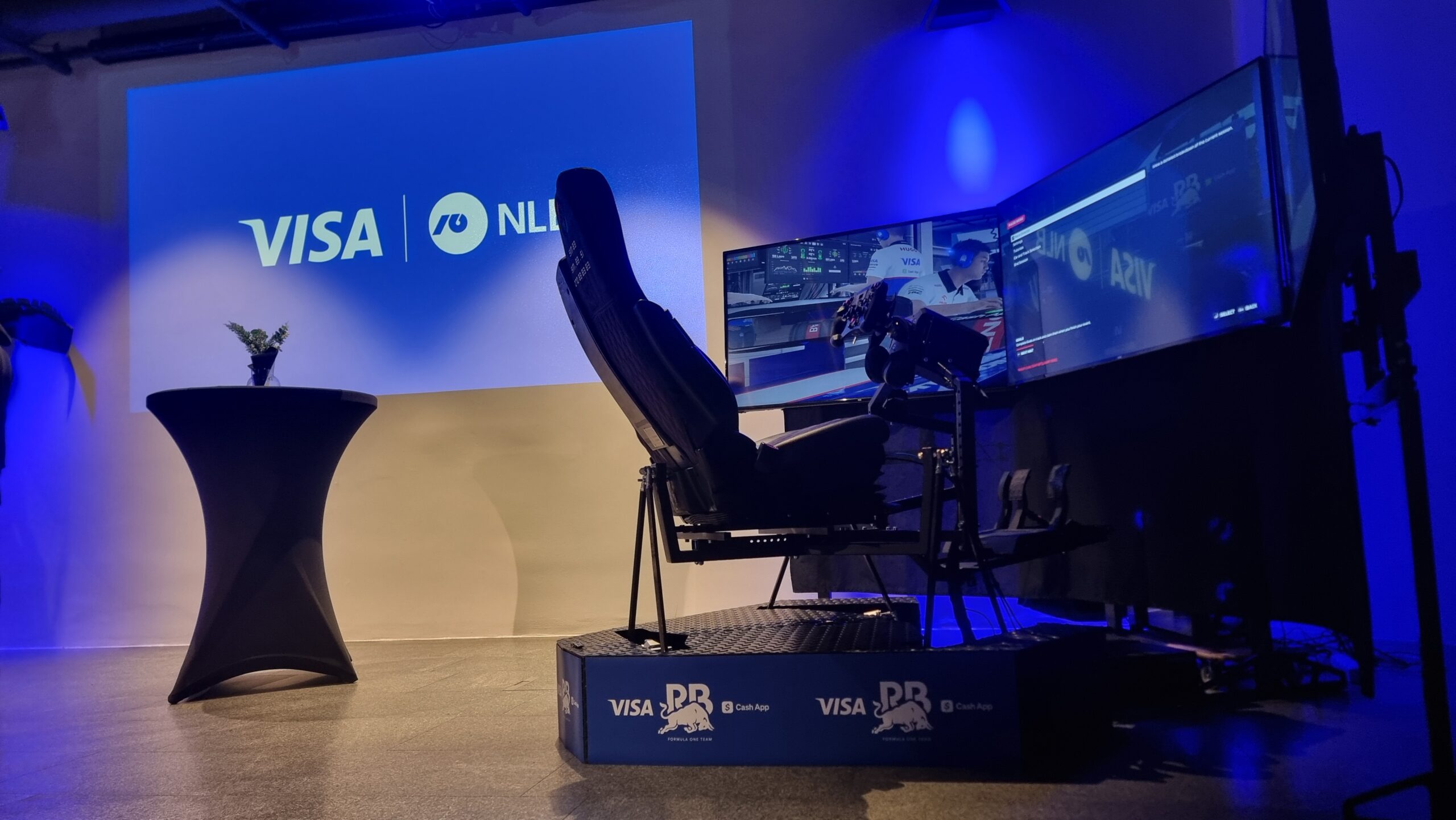
Ljubljana, the picturesque capital of Slovenia, recently hosted an electrifying event that brought the world of Formula 1 closer to a select group of guests. Organized by Visa and the Visa Cash App Racing Bulls F1 team, this exclusive event showcased the seamless integration of cutting-edge simulation technology into high-octane entertainment. The star of the show, aside from the venerable F1 presence, was undoubtedly the SIM83 motion simulator.
Imagine stepping into a cockpit that accurately replicates the feel of an F1 race car, every turn, every jolt, every subtle nuance of the track translated into physical movement. This was the experience offered by SIM83. Guests, from seasoned racing enthusiasts to curious newcomers, had a unique opportunity to test their skills against a virtual representation of an F1 track. The atmosphere was charged with excitement, with a noticeable buzz echoing around the venue as participants took the wheel, felt the G-forces and pushed the virtual limits.
SIM83 simulators provided an immersive experience that went beyond just gameplay. The advanced motion platform accurately recreates the feeling of acceleration, braking and cornering, mimicking the forces experienced by an F1 racer. Force feedback systems on the steering wheel offered realistic resistance and detailed track information, allowing participants to feel every curb and surface change. The high-definition visualization, along with the sound system, added to the feeling that they were really on the track.
The event was not just about experiencing excitement; it was also a platform for friendly competition. Throughout the day, the guests competed for the fastest lap times, their determination evident in their focused expressions and fast inputs. When the virtual chessboard fell in the final session, the best competitors were rewarded, receiving well-deserved prizes that highlighted the competitive spirit and skill displayed on the SIM83 platforms. This celebration not only recognized individual talent, but also highlighted the accessibility of high-fidelity racing simulation.
The collaboration between SIM83, Visa and the F1 Visa Cash App Racing Bulls team highlighted an important trend: the growing integration of advanced simulation into brand activations and public engagement. Such events serve several purposes. For guests, it’s an unforgettable, interactive experience that offers a taste of professional motorsports. For the brands involved, it’s an innovative way to connect with audiences, build brand loyalty and showcase technological power. For SIM83, this has cemented their position as a provider of premium simulation experiences capable of meeting the exacting standards associated with Formula 1.
Simulators in Formula 1: A key competitive advantage
While the event in Ljubljana showcased the entertainment value of SIM83 simulators, their use in professional Formula 1 circuits extends far beyond mere entertainment. For F1 teams, simulators are not just tools; they are indispensable laboratories, training grounds and strategic assets fundamental to achieving success on the world stage. The journey of an F1 car, from concept to podium, is closely linked to the sophisticated world of simulation.
The origins of simulators in motorsport go back to aviation, where flight simulators revolutionized pilot training. As motorsport has become increasingly data-driven and technologically advanced, the potential of similar systems for driver development and car tuning has become apparent. Early racing simulators were rudimentary by today’s standards, often relying on basic visualization and limited movement. However, continuous advances in computing power, sensor technology and mechanical engineering have transformed these systems into highly complex, multi-million dollar facilities that are an integral part of every top F1 team.
One of the main uses of simulators in F1 is the training and development of drivers. Rookies can gain countless hours of track experience without the logistical complications, costs, or risks associated with real-world testing. They can learn new tracks, practice complex maneuvers and develop a feel for the dynamics of a racing car in a controlled environment. Even experienced F1 racers spend a lot of time in simulators, perfecting their technique, practicing the start of the race and reacquainting themselves with the specific characteristics of the track before the Grand Prix. This allows them to quickly settle in as soon as they arrive at the actual track and make the most of their precious track time.
In addition to individual driver performance, simulators are key to car development and tuning. Engineers can test new aerodynamic components, suspension geometries and engine mapping strategies in the virtual world before committing to expensive and time-consuming physical manufacturing and testing. This iterative process allows teams to quickly evaluate different configurations, identify optimal settings for specific tracks and predict how the race car will behave under different conditions. The ability to simulate countless scenarios – different tire compounds, fuel loads, weather conditions and track temperatures – provides an invaluable advantage in the relentless pursuit of performance.
Racing strategy development is another area where simulators play a key role. Teams can run full race simulations, exploring different pit stop times, tire management strategies and responses to potential safety car periods or adverse weather. This pre-event planning allows strategists to develop reliable plans for contingencies and optimize their approach to increase the chances of success. Data gathered from these simulations guides critical decisions made during a live race, from calling a driver into the pits to adjusting the deployment of the energy recovery system.
In addition, simulators are essential to understanding tire behaviour, which is probably one of the most complex and critical aspects of modern F1. Teams can model how different tire compounds perform under different loads, temperatures and wear rates. This in-depth understanding is critical to managing tire degradation during a race and making informed decisions about compound selection and stage lengths. The subtle nuances of tire performance are often the difference between victory and defeat, and simulators provide a safe and repeatable environment to explore these complexities.
The technology behind F1 simulators is astounding. They include highly sophisticated motion platforms that can simulate G-forces in multiple axes, providing incredibly realistic acceleration, braking and cornering sensations. Visual systems often use multiple high-definition displays or even VR headsets to create an immersive, panoramic view of the track. Force feedback steering wheels and pedals are carefully designed to mimic the precise steering feel of an F1 race car and transmit every bump and vibration from the virtual track. Crucially, these simulators are powered by incredibly accurate mathematical models of the car’s physics, aerodynamics, tires and engine, developed with massive amounts of real-world data and Computational Fluid Dynamics (CFD) simulations.
The synergy between the virtual and physical realms is constant. Data collected on the actual tracks is fed back into the simulator models to improve their accuracy and fidelity. Rather, the insights gained from the simulator sessions are used to guide the car’s physical development and on-track strategy. This constant feedback loop ensures that F1 teams are constantly improving their understanding of their car and maximizing its potential.
The future of simulation in motorsport and beyond
The advances seen in the SIM83 range and high-tech F1 simulators point to an exciting future for simulation technology. For motorsport, the role of simulators will only grow and become even more involved in every aspect of car design, driver training and race preparation. Pričakujemo lahko še večjo realističnost, bolj izpopolnjene fizikalne modele in morebitno integracijo umetne inteligence za nadaljnje izboljšanje procesa učenja in razvoja.
Beyond professional motorsport, the influence of advanced simulation is expanding. Companies like SIM83 are democratizing access to high-fidelity racing experiences, allowing enthusiasts to taste the thrill of F1 without the need for an actual racing license or millions of dollars. This not only fuels the passion for racing, but also serves as a crucial training ground for the next generation of racers, some of whom may transition from virtual to real tracks.
In addition, the technology developed for racing simulators has applications in other fields as well. From training pilots and astronauts to developing autonomous vehicles and even in medical simulations, the principles of realistic motion, accurate physical modeling, and immersive environments are universally valuable. There is also a growing demand for highly skilled engineers and software developers in this field, contributing to a vibrant innovation ecosystem.
The event in Ljubljana, which featured SIM83 motion simulators alongside the F1 Visa Cash App Racing Bulls team, was a testament to this evolving landscape. It showed how cutting-edge technology can bring the elite world of Formula 1 closer to the public, offering an unforgettable experience and fostering a deeper respect for the sport. It also served as a powerful reminder that behind every F1 victory is not just a talented driver and a finely tuned car, but also countless hours spent in the digital world, meticulously honing skills, refining strategies and pushing the boundaries of what is possible, all thanks to the ever-evolving world of simulation. The intersection of the virtual and the real embodied by companies like SIM83 continues to redefine our engagement in the exciting world of high-performance racing.