
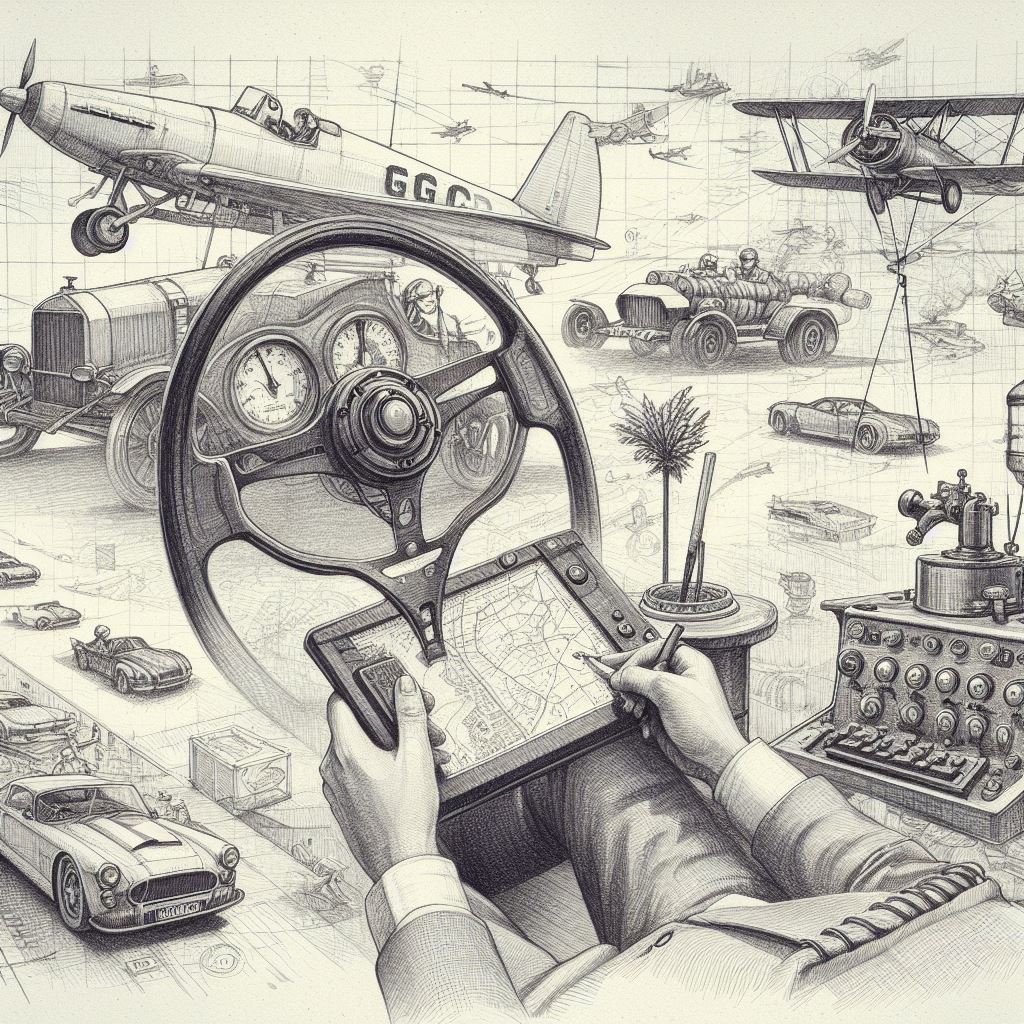

The history and development of driving simulators dates back to the early days of computing, when the first concepts of virtual reality began to transform the way people perceive training and education. From simple mechanical devices to advanced digital systems, driving simulators have become a key element in driver training programmes. They also enable the safe and effective training of pilots, military personnel and other professionals.
In the early years, driving simulators were fairly basic, often consisting of physical vehicle models and simple visual displays. With technological advances, these systems have evolved into complex devices that use artificial intelligence, machine learning and high-quality graphics to create realistic scenarios. Today, driving simulators offer a wide range of features, from eye tracking and motion tracking to integration with haptic feedback, allowing users to experience the sensation of actual driving.
The development of driving simulators is closely linked to research into human behaviour and perception. By understanding how people react to different driving conditions, developers have been able to create models that accurately simulate real-life situations. This is particularly important when preparing drivers for unpredictable events on the road, such as accidents or extreme weather conditions.
In addition to educational applications, driving simulators are also used in the entertainment industry. Racing simulators are popular among motoring enthusiasts and offer a safe environment for testing the limits of vehicles and drivers’ abilities. With further technological developments, simulators are expected to become even more realistic and accessible to a wider audience.
In the future, we can expect even greater integration of driving simulators with virtual reality and other forms of immersive learning. This will enable an even more immersive experience and will have a significant impact on the way people learn and train to drive safely. The history and development of driving simulators are testament to humanity’s constant endeavour to improve technology and experiences, and point to a bright future in this field.