

- Kako ostati poln energije in dobre volje na cesti
- 1) Start at home: mini “pre-trip” routine (5-10 min)
- 2) Micro-breaks at 45-75 minutes
- 3) Breathing for focus (box-breath or 4-4-6)
- 4) Hydration: little but often
- 5) Smart snacks
- 6) Seat ergonomics (2 minutes of adjustment)
- 7) Eyes are not “autopilot”
- 8) Temperature, light and smell
- 9) Music that works for you
- 10) Fatigue is a fact, not a defeat
- 11) Mini-mobility for drivers (3 movements)
- 12) “Mind reset” in 60 seconds
- 13) Coffee as a tool, not a support
- 14) Plan your route according to the circadian clock
- 15) Clothing and footwear
- 16) Mental game: “checkpoints”
- 17) Safety first: never against body signals
- 18) For business drivers and teams: standardize
- 19) Technology as help
- 20) Training without risk: simulator
- 21) “Happy driver” is contagious
- How can SIM 83 help you
How to stay full of energy and good mood on the road
Long miles are easier when you have a system. Here are 21 practical tricks—from micro-breaks to ergonomics—that will keep you focused, energized, and in good spirits, whether you’re driving every day or heading out on a long road trip.
1) Start at home: mini “pre-trip” routine (5-10 min)
- 300-500 ml of water + a pinch of electrolytes.
- Quick “body scan”: posture, tension in the shoulders, mobility of the neck.
- 2× 10 deep diaphragmatic breaths (slow exhalation).
Why it works: hydration and oxygen raise the biorhythm right from the start.
2) Micro-breaks of 45-75 minutes
- 90 seconds of walking or easy “march in place”.
- 20-30 seconds of hamstring, hip and chest stretch.
- 6 slow breaths (4-4-6 rhythm).
Pro tip: set a reminder on your phone or a radio jingle as a trigger.
3) Breathing for focus (box-breath or 4-4-6)
- Inhale 4 s – hold 4 s – exhale 6 s.
- 1-3 minutes when you feel the “fog”.
Why it works: Calms the nervous system and sharpens attention.
4) Hydration: little but often
- 150-200 ml per 20-30 min.
- Avoid “sugar bombs” and liters of coffee.
Pro tip: a thermos with a lukewarm drink (herbal tea) is friendly to the stomach.
5) Smart snacks
- Protein + fiber: nuts, Greek yogurt, whey drink, whole grain crackers.
- Fruits with a low glycemic index (apple, berries).
Why it works: stable sugar = stable focus.
6) Ergonomics of the seat (2 minutes of adjustment)
- Knees slightly lower than hips; backrest at an angle of ~100–110°.
- Steering wheel closer so you don’t stretch your shoulders.
- Lumbar support (small pillow or rolled towel).
Result: less micro-tension = less hidden fatigue.
7) Eyes are not “autopilot”
- Each micro-stop: look far-near-left-right.
- 20-20-20 rule: look 20 feet (6 m) away every 20 minutes 20 seconds.
Why it works: relieves eye muscles and prevents dry eyes.
8) Temperature, light and smell
- Cabin 19-21 °C, gentle air circulation.
- Daylight (if possible), moderate natural lighting.
- Refresher with mint or citrus (do not overdo it).
Micro stimulants increase alertness without coffee.
9) Music that works for you
- “Tempo stacking”: start with a more relaxed tempo, switch to an energetic rhythmic set as the focus drops.
- A podcast/audiobook for monotonous stretches; music for the more demanding.
Goal: tune your brain to the journey, not the other way around.
10) Fatigue is a fact, not a defeat
- Sleepiness between 13:00-15:00 and after 22:00 is more common.
- If you yawn, squint often or “swim” around the waist – stop.
Golden rule: 10-20 minute “power nap” (no more) + a short walk.
11) Mini-mobility for drivers (3 movements)
- Opening the chest: hands behind the back, shoulders down, 20 s.
- Hip hinge 8-10 reps.
- Neck: slow semicircles, no sudden twists.
Effect: blood circulates, back grateful.
12) “Mind reset” in 60 seconds
- Label three things you hear, two you feel, one you see.
- Smile (serious): the muscles send a signal to the brain – the mood rises.
13) Coffee as a tool, not a support
- 1-2 smaller doses early; nothing 6 hours before bed.
- Avoid energy drinks before driving at night.
14) Plan your route according to the circadian clock
- Drive the most demanding sections in your “peak” time (for most of the morning).
- Break up long night drives; plan your stops in advance.
15) Clothing and footwear
- Layered, air fibers; shoes with good arch support.
Don’t: tight pants and sturdy belts that cut into the stomach.
16) Mental game: “checkpoints”
- Divide the road into “sections” with small goals (next exit point, stop).
- Perform one micro-ritual (breathing or stretching) for each checkpoint.
17) Safety first: never against body signals
- If the steering wheel shakes from your micro naps – stop immediately.
- Driving is a cognitive sport: be professional with yourself.
18) For business drivers and teams: Standardize
- Have an “Energy Kit” in your car/vehicle: elastic band, protein snack, electrolytes, wipes.
- Team rule: Any driver may propose a stop without explanation.
19) Technology as an aid
- Reminders on the watch/phone; navigation with stops.
- Breathing apps and short exercises (offline, no distractions).
20) Risk-free training: simulator
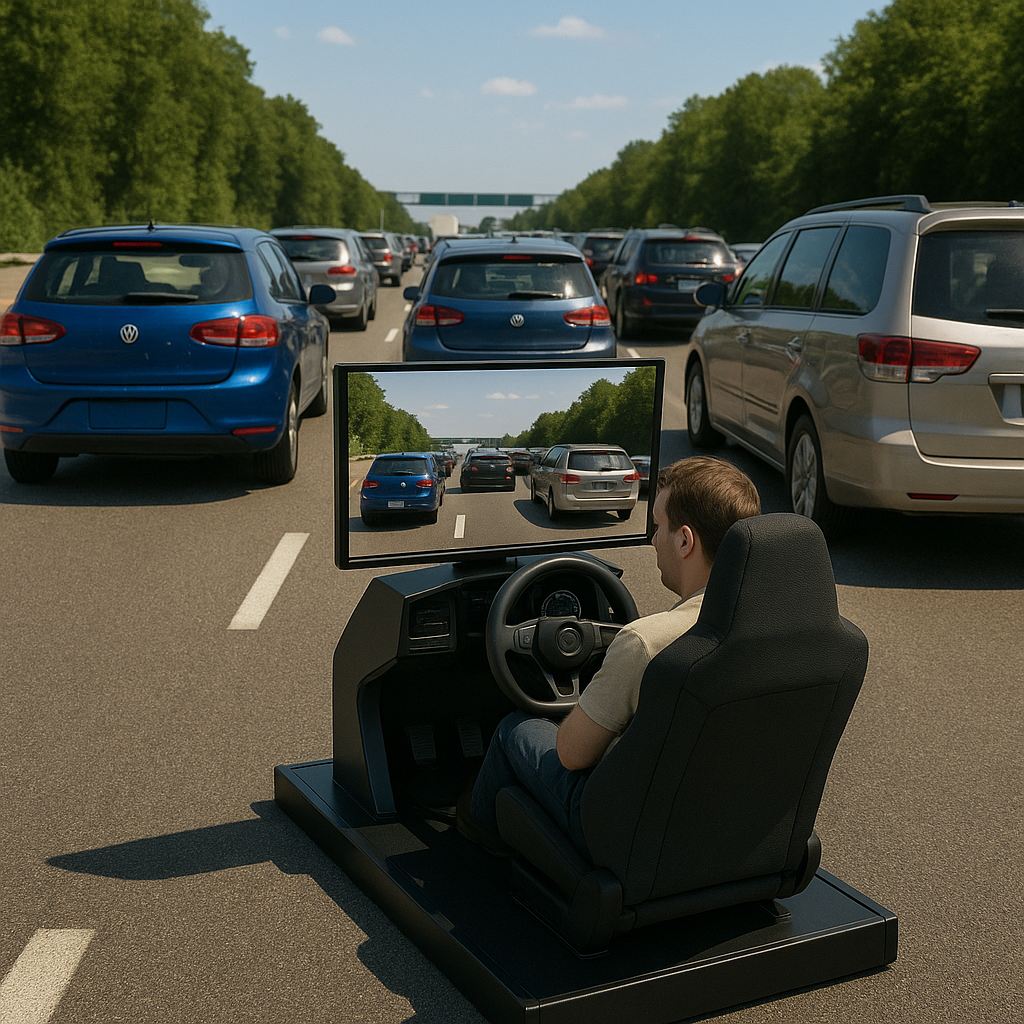
In SIM 83, we practice fatigue management, focus under load and micro-routines in a safe environment. Our SIM83-MS06 with motion, triple 55″ screens and telemetry shows you how your focus changes and when it is time to reset.
Advantage: no road risk + immediate feedback.
21) “Happy driver” is contagious
- Hello, short joke, thanks for the toll: micro moments boost morale.
- Keep in touch with passengers/team: positive energy spreads.
How SIM 83 can help you
- Individuals: quick learning of micro-pauses and breathing with simulator exercises.
- Companies/fleets: standardized protocols, competitive “focus challenges” and reports.
- Events/teambuilding: fun, measurable and safe – people leave more motivated.
Want to try it out? Book an appointment or an event package: SIM 83 – Driving simulators (Dobja vas 253, 2390 Ravne na Koroškem) • +386 (0)70 83 83 83 • sim@83.si.